

Just for fun here’s a roundup of interesting facts and figures presented in visual displays by the U.S Department of Transportation Federal Highway Administration.
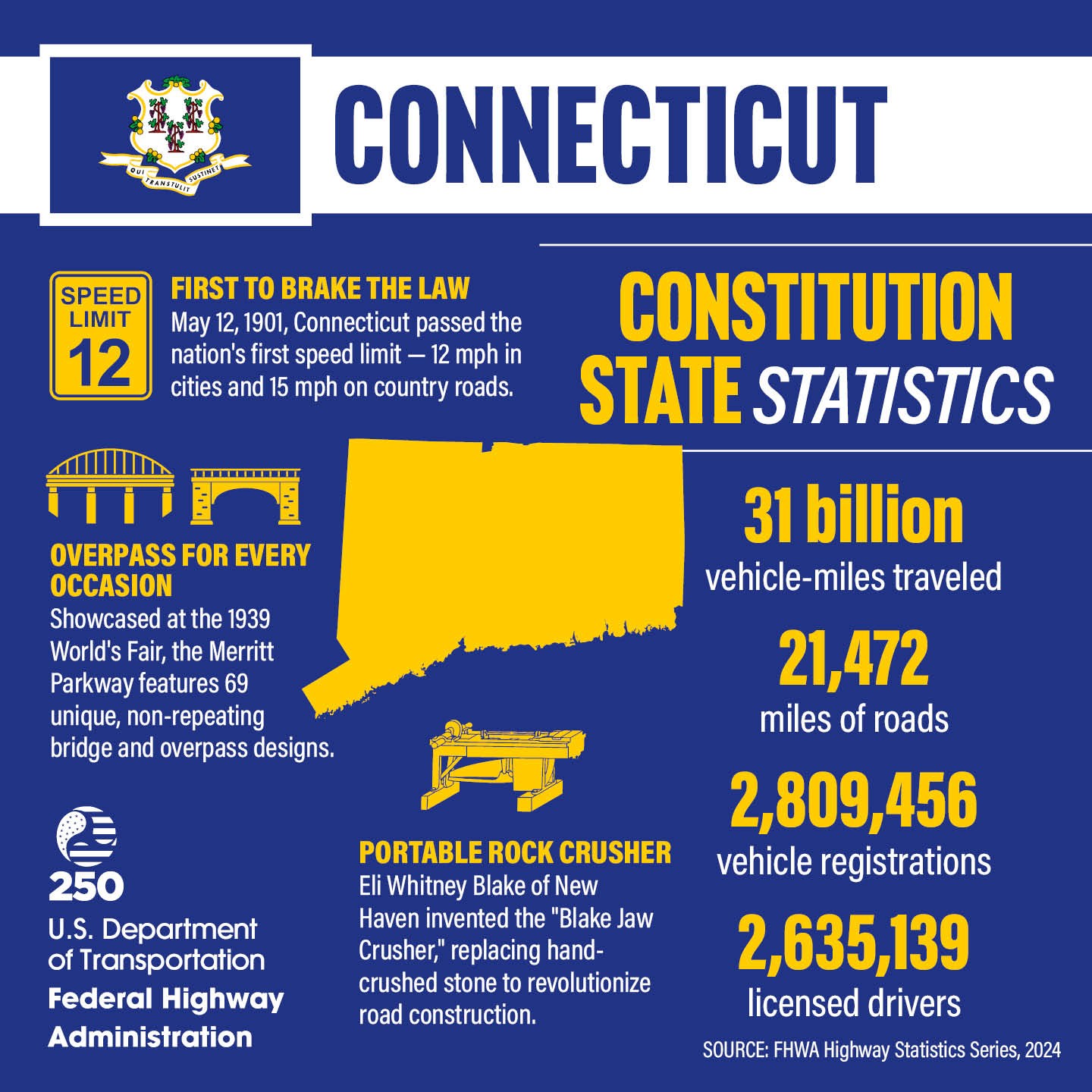
From being the first to set a speed limit to creating an innovative construction method, Connecticut has always been a trailblazer on the road. Check out these fast facts about the Constitution State’s rich transportation history and modern impact:
- CT passed the nation’s first speed limit in 1901 (a blazing 12 mph in cities!).
- Each of Merritt Parkway’s 69 bridges and overpasses has a distinct, non-repeating architectural design.
- CT is home of the “Blake Jaw Crusher,” the invention that revolutionized modern road construction.
- Today: 2.6 million+ licensed drivers and 31 billion vehicle-miles traveled.
________________________________________________________________

In honor of #America250, we are beginning our journey in the state where the nation itself began: Delaware. From the world’s longest twin-span suspension bridge to the first modern superhighway, Delaware has always paved the way. The First State is still moving us forward.
________________________________________________________________
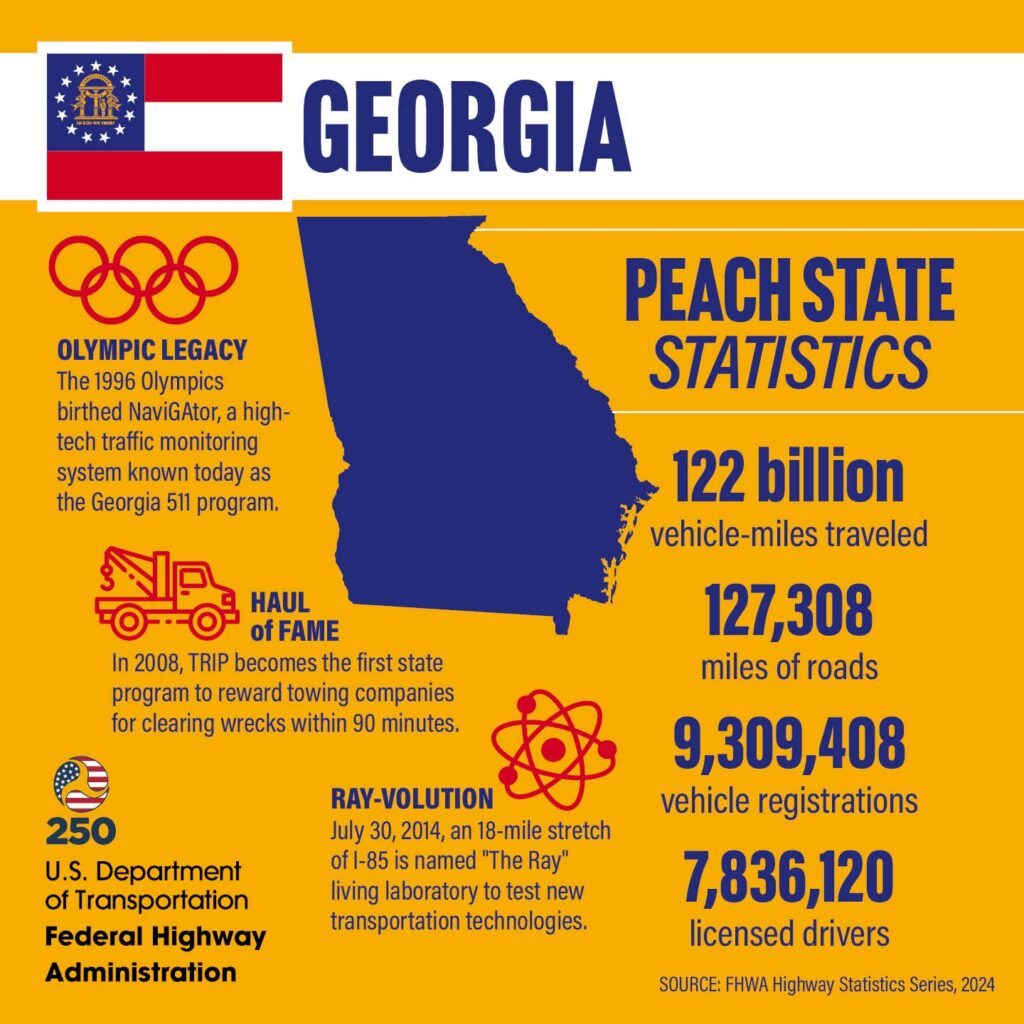
Georgia isn’t just famous for its peaches—it’s a powerhouse of transportation innovation! From the 1996 Olympics to the highways of the future, the Peach State keeps the Southeast moving. Georgia is a vital hub for the entire nation.
________________________________________________________________

From the first macadam road to the starting point of the National Road, Maryland has always paved the way for American travel. Check out these Old Line State stats and historical firsts as we celebrate Maryland’s role in moving the nation forward.
- Innovation: Baltimore invented the sound-activated traffic signal in 1928.
- Expansion: Maryland hosted America’s first federal highway.
- Impact: Over 57 billion miles traveled across 32,669 miles of road.
Whether you’re cruising down the National Road or crossing the Bay Bridge, Maryland’s roads are the backbone of our history.
________________________________________________________________
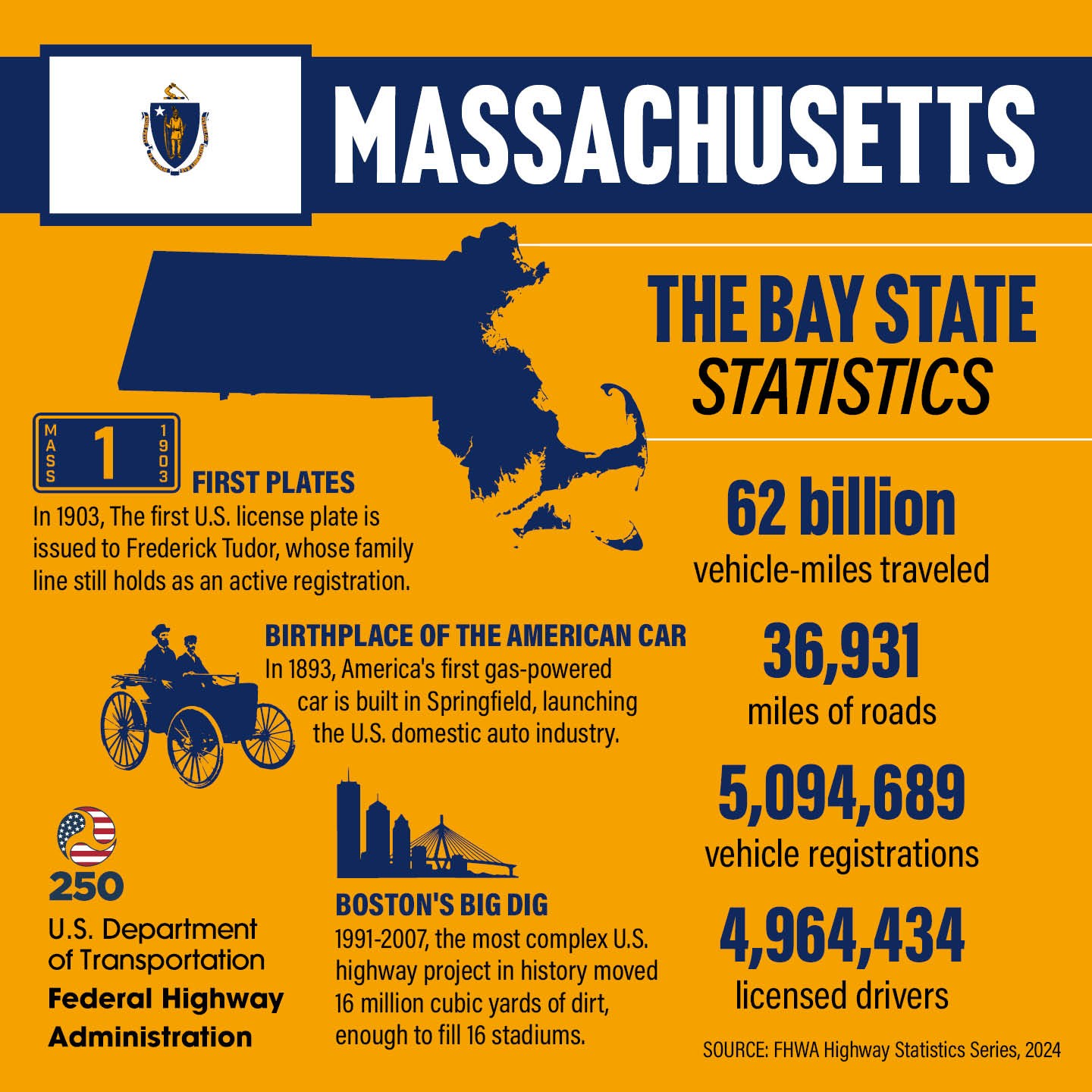
From the first license plates to the “Big Dig,” Massachusetts has always been in the driver’s seat of American transportation history. As we celebrate the America 250th, we’re looking back at the Bay State’s incredible legacy on the move:
- 1893: The first gas-powered car in the U.S. was built right in Springfield.
- 1903: Massachusetts issued the very first U.S. license plate.
- Today: With over 36,000 miles of roads and 62 billion vehicle-miles traveled, the spirit of innovation continues to power the Commonwealth.
________________________________________________________________

From the world-record-breaking Cornish-Windsor Covered Bridge to the breathtaking views along the Kancamagus Highway, New Hampshire’s infrastructure is as legendary as its landscapes. Did you know?
- NH ranks #1 in the nation for road quality.
- Nearly 100% of NH’s divided highways are in good or fair condition.
- With over 16,000 miles of roads, there’s always a new path to explore.
Whether you’re one of NH’s 1 million+ licensed drivers or just visiting the waterfalls, enjoy the ride on some of the best pavement in the country!
________________________________________________________________
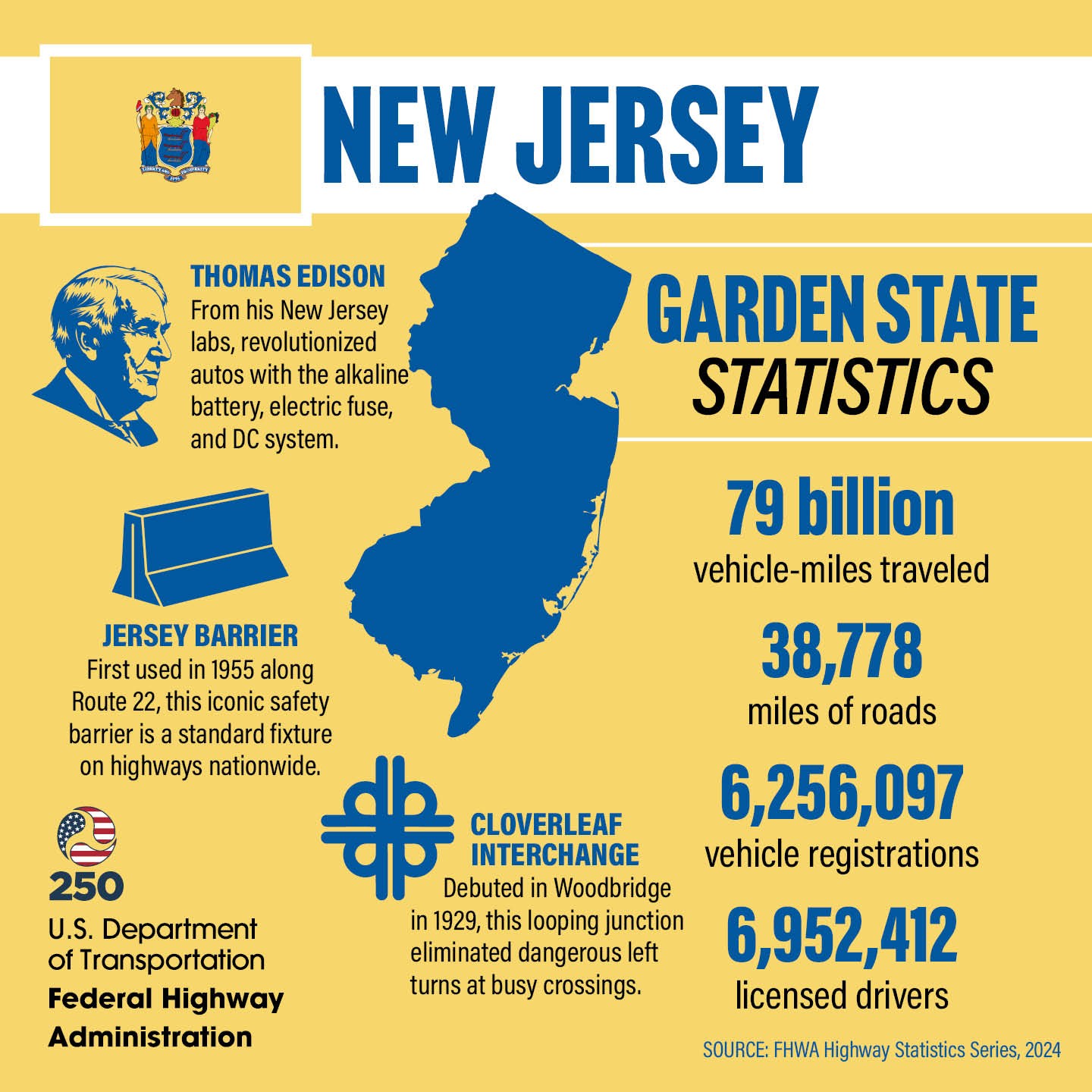
From Menlo Park to the Meadowlands, the Garden State has always been in the driver’s seat of American innovation. Did you know New Jersey changed how the entire world moves? New Jersey continues to keep the nation moving forward.
________________________________________________________________
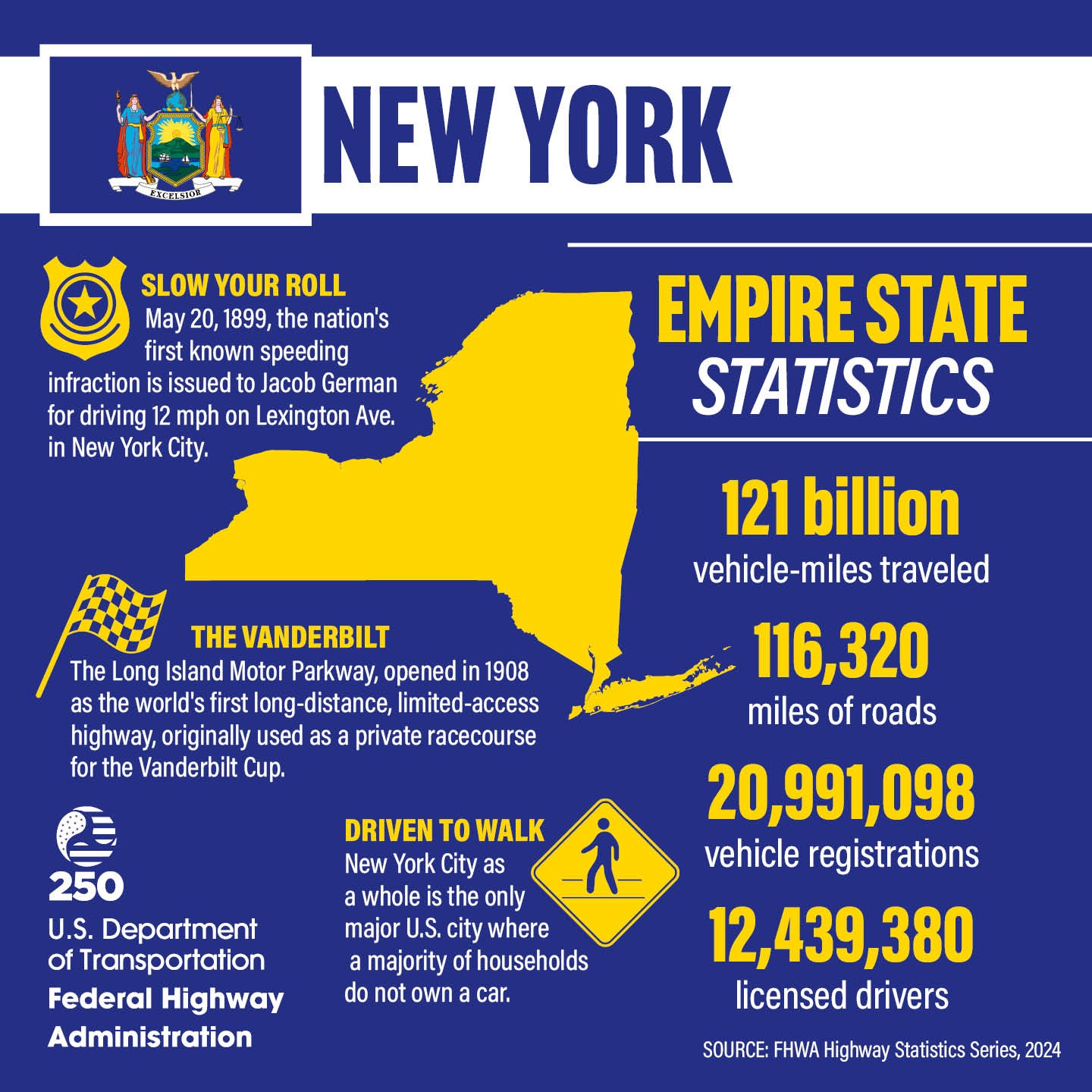
From a blazing 12 mph speeding ticket in 1899 to over 116,000 miles of roadways today, the Empire State has always been in the driver’s seat of transportation history. Did you know that New York City is the only major U.S. city where most households don’t own a car? Or that Long Island was home to the world’s very first limited-access highway?
________________________________________________________________

- From 19th-century wooden planks to 108,000+ miles of road, North Carolina has always been a transportation trailblazer! Check out the infographic to see some incredible Tar Heel State facts:
- Cyclists Led the Way: In the 1890s, NC bicyclists launched the Good Roads Movement to advocate for better infrastructure.
- World Record Holder: Built in 1854, the 129-mile Fayetteville and Western Plank Road is the longest wooden highway ever constructed.
- State-Driven: NC is one of only four states with no county roads, boasting one of the nation’s largest state-maintained highway systems (about 80,000 miles).
- Today, over 8.1 million licensed drivers keep NC moving!
________________________________________________________________
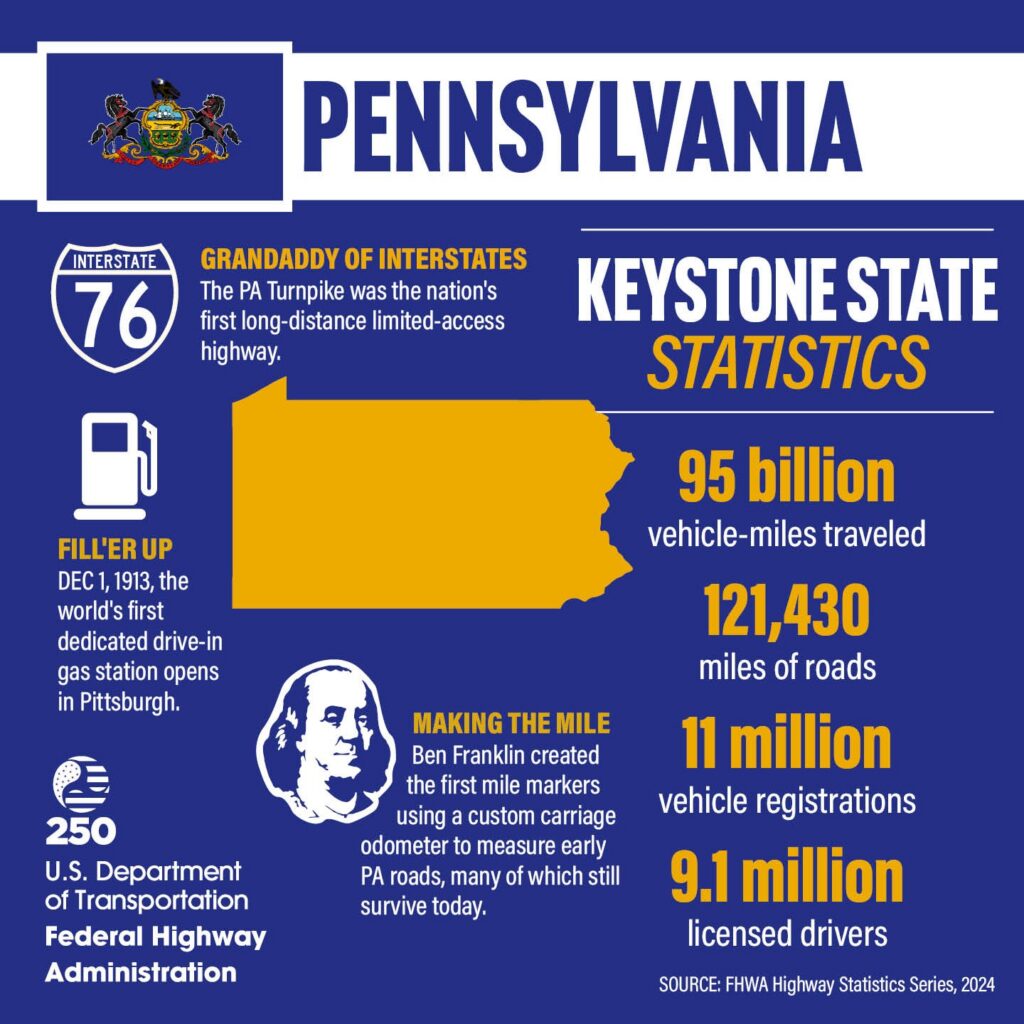
Innovation isn’t just about tech—it’s about infrastructure. In 1913,Pennsylvania debuted the world’s first dedicated drive-in service station. It was the first time a building was specifically designed to handle the flow of cars, offering professional service and even free maps to travelers. PA has always been the “Keystone” of American transit. From the first turnpike to the first gas station, we keep the country moving.

South Carolina is more than just a scenic destination—it is a powerhouse of American infrastructure and manufacturing. From being the U.S. Tire Capital to maintaining the 4th largest state highway system in the nation, the Palmetto State is built for the long haul.
- 78,432 total miles of roads.
- 62 billion vehicle-miles traveled annually.
- 130,000+ tires produced every single day.
- 11 scenic byways across the state.
________________________________________________________________
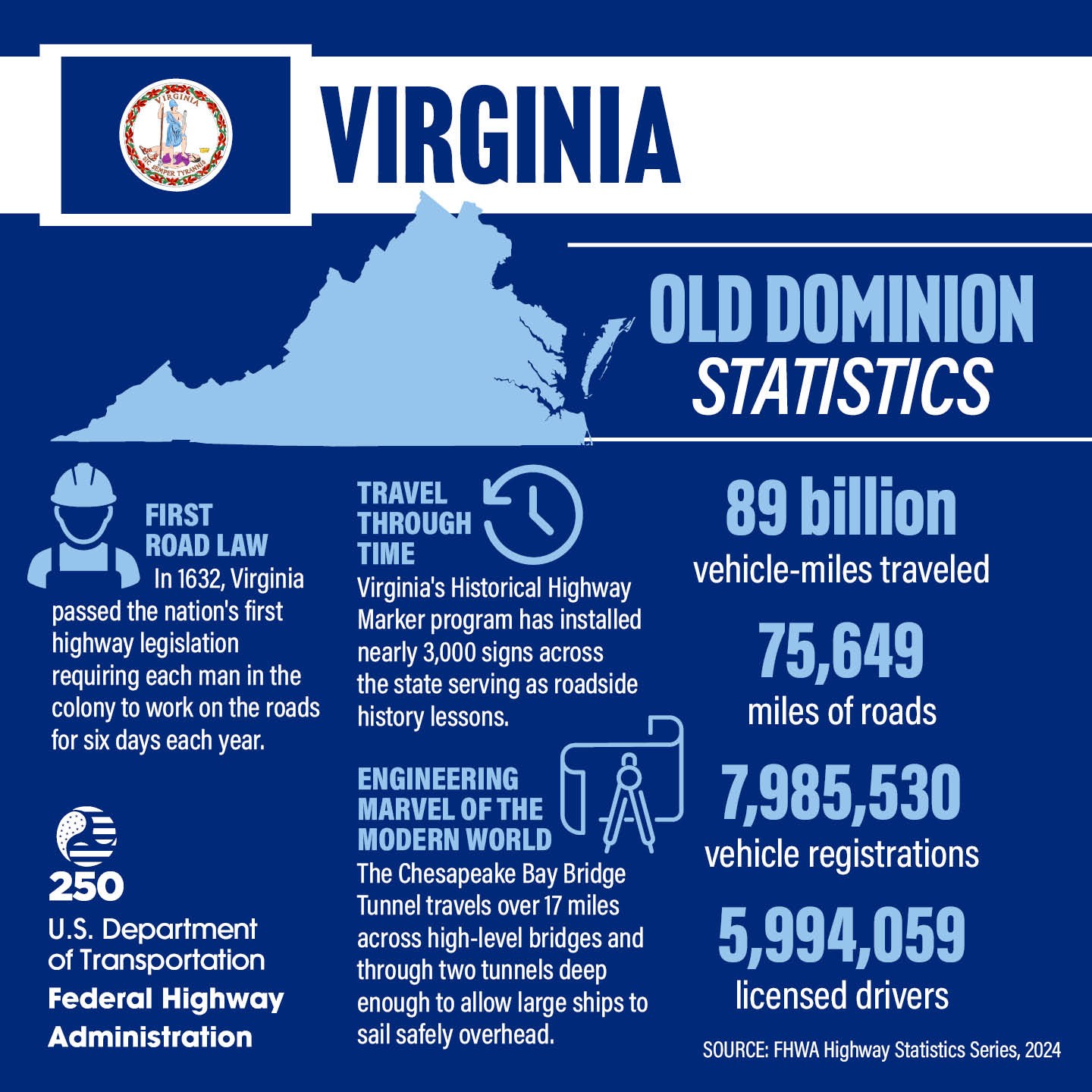
From the nation’s first road law in 1632 to the engineering marvel of the Chesapeake Bay Bridge-Tunnel, Virginia’s highways have a story to tell. As we approach America’s 250th anniversary, we’re taking a look at the “Old Dominion” and the infrastructure that keeps us moving. Whether you’re passing one of the 3,000 historical markers or contributing to the 89 billion miles traveled in the state each year, you’re part of Virginia’s living history.
________________________________________________________________
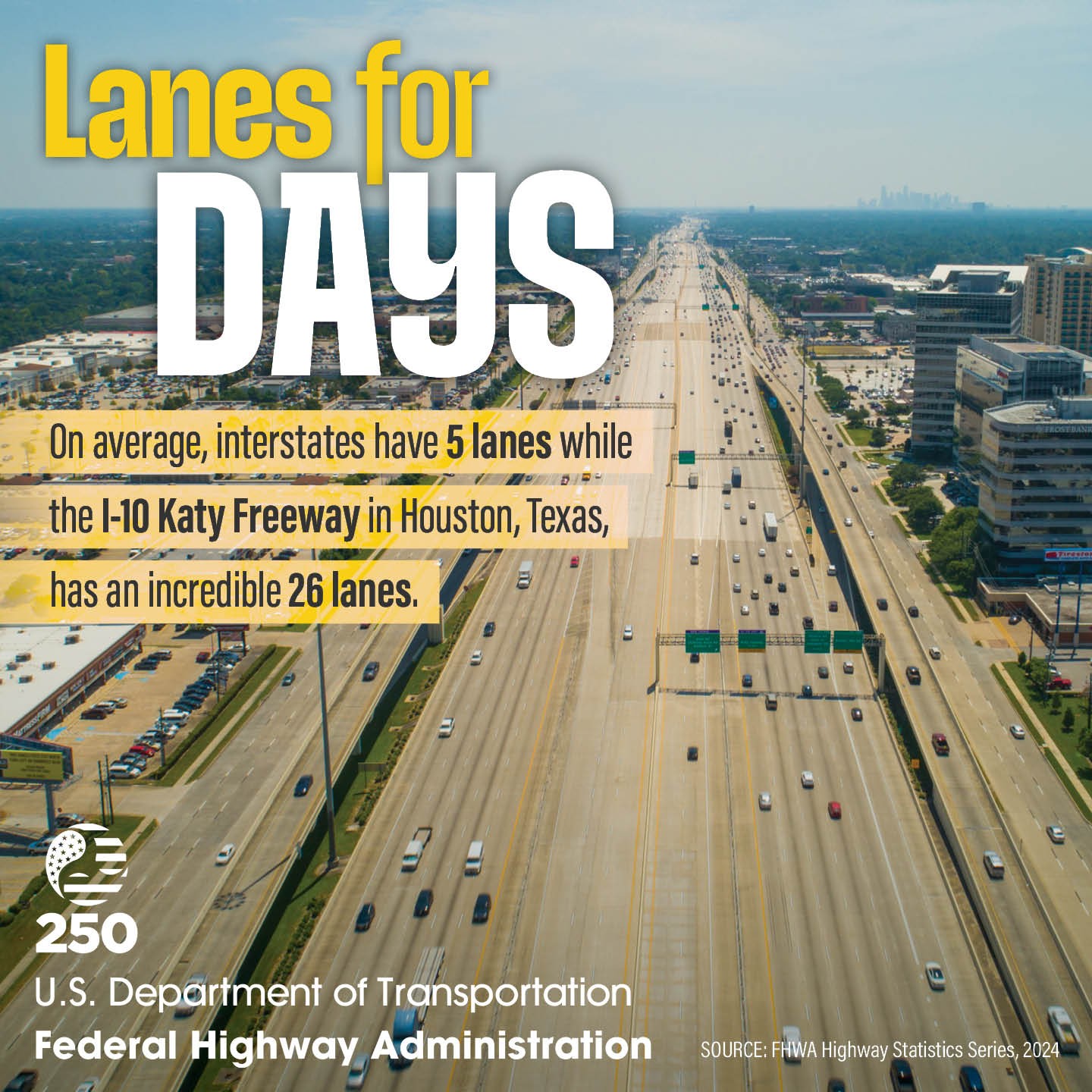
Everything is bigger in Texas – While the average U.S. interstate has about 5 lanes, the I-10 Katy Freeway in Houston boasts 26 lanes at its widest point. That’s more than five times the national average! Why so many lanes? To keep up with one of the fastest-growing regions in the country, the Katy Freeway incorporates: Main Lanes: For long-distance travel; Managed Lanes: High-occupancy and toll lanes to bypass peak traffic; Frontage Roads: Multi-lane feeder roads that provide access to local businesses and neighborhoods.
________________________________________________________________

Safe actions save lives – Whether you’re behind the wheel or working on the road, everyone deserves to get home safely. According to recent data from NHTSA, work zone fatalities saw a promising decline in 2024—but we still have a long way to go. In 2024 alone, speed was a factor in one-third of all fatal work zone crashes. This National Work Zone Awareness Week, let’s commit to driving like our neighbors’ lives depend on it—because they do.
________________________________________________________________
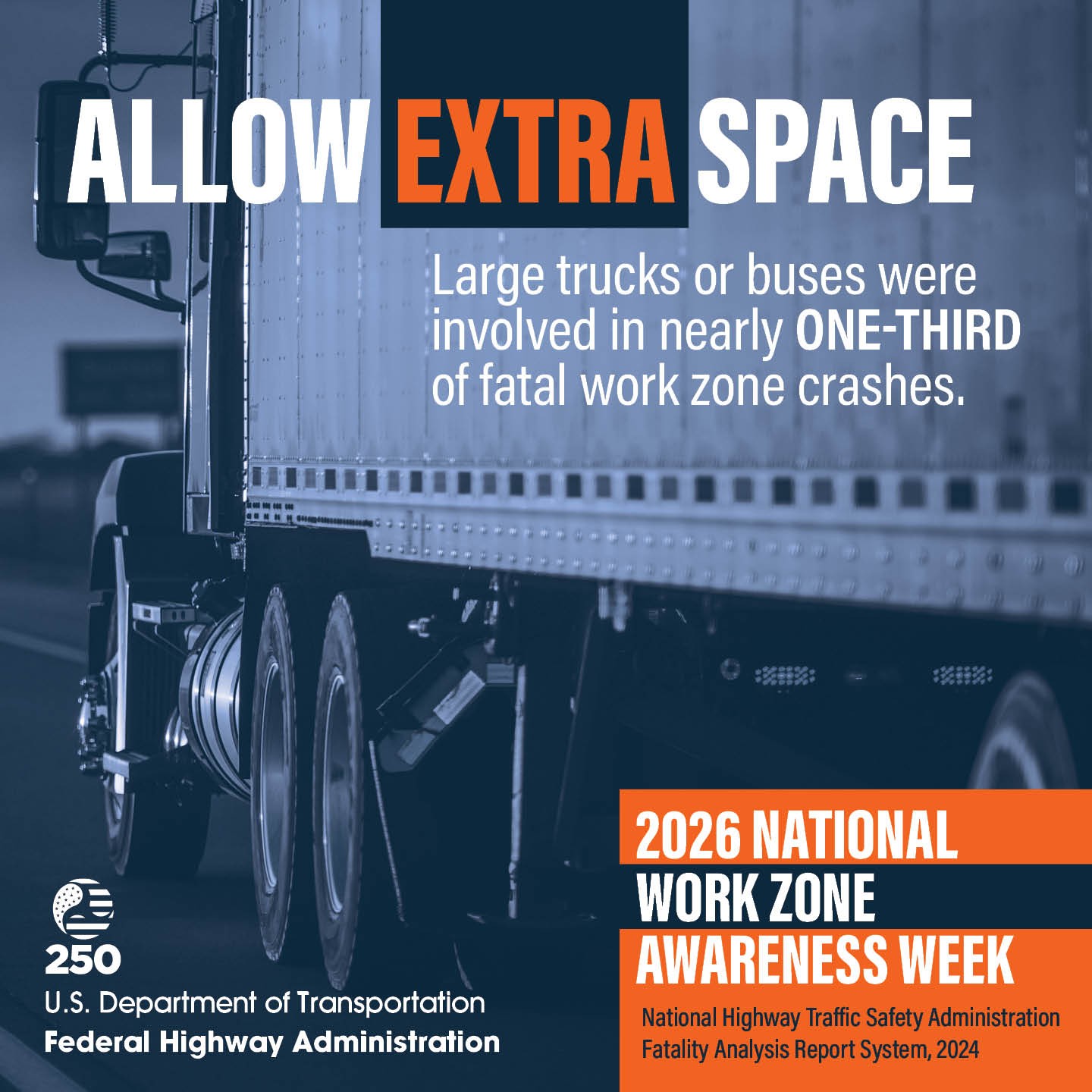
Give them room to move – Large trucks and buses have massive blind spots and require much longer distances to come to a full stop. In work zones—where lanes are narrow and stops are sudden—that extra space is a lifesaver.
FACT: Large trucks or buses were involved in nearly one-third of fatal work zone crashes. Don’t cut off commercial vehicles and maintain a generous following distance.
________________________________________________________________

Eyes up, phone down – A work zone can change in a heartbeat. Whether it’s a worker stepping into the lane or a sudden shift in traffic, you can’t react if you aren’t looking. Your text or playlist can wait—the lives of those on the road cannot. FACT: Distractions were involved in more than one in eight fatal work zone crashes. Put the phone away and stay focused on the road ahead.
________________________________________________________________

Tailgating is a trap – Rear-end collisions are the most common type of crash in work zones. When traffic slows down unexpectedly, being too close to the bumper in front of you leaves you with zero exit strategy. FACT: Nearly one-quarter of all fatal work zone crashes were rear-end collisions. Leave enough “cushion” between you and the car ahead to account for sudden braking.
________________________________________________________________
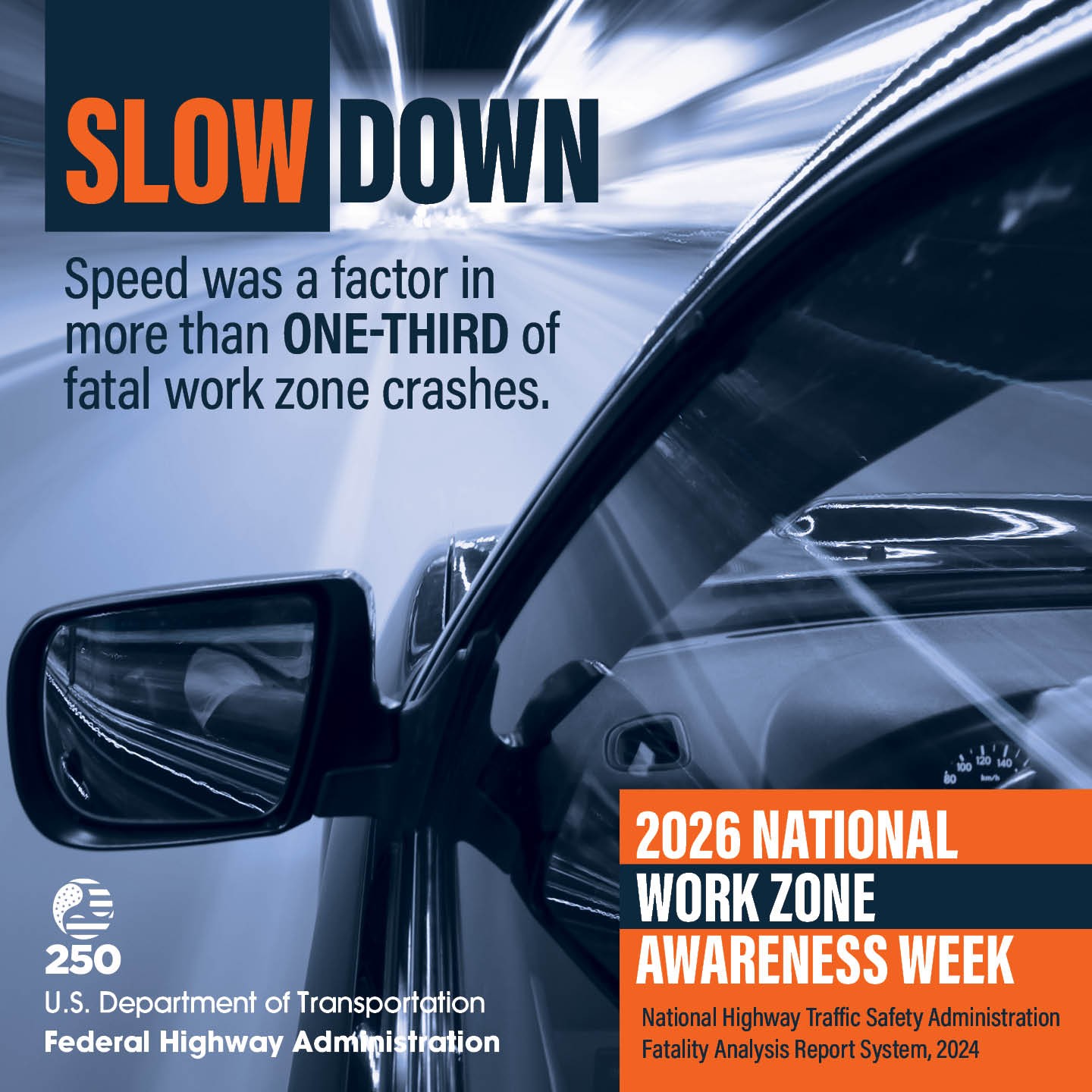
Speeding isn’t worth the risk – Work zones aren’t just road improvements; they are someone’s office. High speeds reduce your reaction time and increase the severity of any impact. Obey the posted work zone speed limits—even if you don’t see workers immediately. FACT: Speed was a factor in more than one-third of fatal work zone crashes. Drop your speed and stay alert. Better to arrive a few minutes late than not at all.
________________________________________________________________

They have families too – Road workers, flaggers, and inspectors are extremely vulnerable. They are often just feet away from moving traffic with nothing but a vest for protection. When you see orange cones, start looking for the people behind them. FACT: Nearly 170 people were killed in work zone crashes while on foot. Be extra vigilant for pedestrians and flaggers. Give them the space they need to work safely.